

Emergence by 2025: Idriss Deby Itno’s strategy
With an underdeveloped education system, Chad wants to lean on Tunisia to take off and to train skilled human resources.
Translated from French. Lire en français
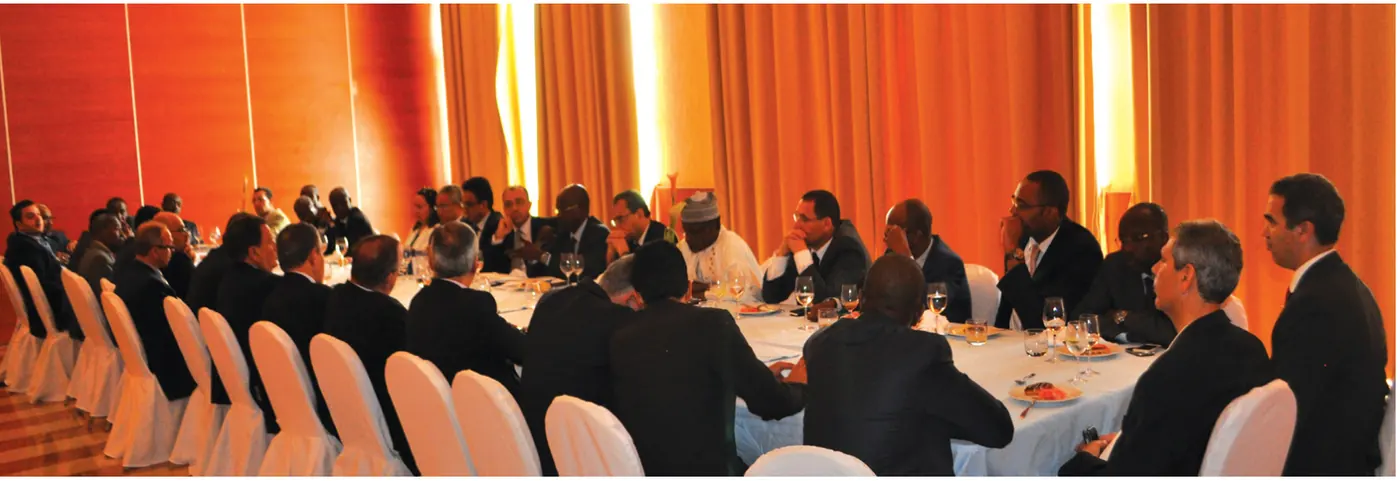
With an underdeveloped education system, Chad wants to rely on Tunisia to launch a take-off long delayed by armed conflict and other setbacks. Chadian President Idriss Deby Itno, who aims to make Chad an emerging country by 2025, wants to equip the country with skilled human resources.
Like most African countries, Chad has set itself a date — or at least a period — to join the very exclusive club of emerging economies. In Central Africa, unlike neighbouring countries that aim to emerge by 2035, Idriss Deby Itno’s Chad intends to get there by 2025.
A strategy document underpins this great ambition which, despite the country’s difficulties, remains achievable — for the Chadian president does not lack determination. Known for his discretion about his nation-building plans, President Idriss Deby Itno nonetheless lifted the veil on his emergence strategy. At the Chad-Tunisia economic forum held in N’Djamena on 23 and 24 June, he said he intends to rely on training high-quality human resources to develop this vast country.
700 students in Tunisia
To get there, Idriss Deby Itno is counting heavily on Tunisia, a brotherly and friendly country with which Chad has recently signed several framework agreements, including one on education. In his view, building human capital is the key to the goal, because it is what enables any country to develop — hence his request for Tunisia’s support in this field.
“Today we have more than 700 Chadian students in Tunisia, studying in the best possible conditions,” the Chadian head of state says with satisfaction. “The agreements just signed bring our two countries even closer and strengthen existing bilateral cooperation,” he adds, praising the skills Tunisia now has in every field — skills he considers proven. “That is why Chad will be able to benefit from them to begin a take-off long delayed by armed conflict and other setbacks. Our ambition is to make Chad an emerging country by 2025. For that, Chad needs skilled human resources,” says Idriss Deby Itno. The Chadian president is convinced that Africa has proven talent that must be put at Africa’s service.
Chad’s education system remains very underdeveloped, with only a handful of universities and professional schools. Tunisia, by contrast, has a highly advanced system for training human resources. In 2005-2006 it had 178 public higher-education institutions, including 13 universities, 24 higher institutes of technological studies and six teacher-training institutes. The Ministry of Higher Education oversees 155 institutions, 23 of them jointly with other ministries. In Tunisia, university education is practically free — not yet the case in many sub-Saharan countries. Chad therefore intends to catch up.
- Author:
- Moïse Aignan N.
- Published on:
- Tuesday, 1 July 2014
Related articles

One QR code to pay in six countries: GIMAC's quiet revolution
Paying a merchant with your phone, whatever your operator or bank, in any CEMAC country: that is the goal of the reforms led by the BEAC and GIMAC. Where do things stand, and where does Chad fit in?
Livestock, the real engine of Chadian growth
In the second quarter of 2026, Chad's economy accelerated thanks to livestock and food crops, while extractive activities declined. A useful reminder: the country's wealth is not just oil.

Expensive oil, sluggish growth: the CEMAC paradox
Oil is more expensive, yet the zone's growth is not taking off. Why does a largely oil-producing region benefit so little from higher prices?

BVMAC: will the BGFI effect inspire Chadian companies?
BGFIBank group's stock market listing gave the regional financial market a real boost. The challenge now is to build on it: attract new companies, including Chadian ones, and keep trading alive.